


These reflections are a result of more than 40 years of ministry as a Roman Catholic priest. Most of these years I spent in the Diocese of Charlotte which covers Western North Carolina. Now I am retired, and live in Medellín, Colombia where I continue to serve as a priest in the Archdiocese of Medellín.
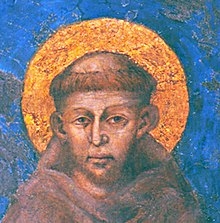
For the one whom God sent speaks the words of God. He does not ration his gift of the Spirit. (Jn 3:31-36)
https://bible.usccb.org/bible/readings/042023.cfm
The Lord is generous in the gift of the Spirit, given to us without measure. We need that Spirit so that like the early disciples we too can proclaim the Good News. And as the Spirit spoke through Saint Francis of Assisi, “Preach always, use words when necessary.”

God so loved the world that he gave his only-begotten Son, so that everyone who believes in him might not perish but might have eternal life. For God did not send his Son into the world to condemn the world, but that the world might be saved through him. (Jn 3:16-21)
https://bible.usccb.org/bible/readings/041923.cfm
Some have called John 3:16 the heart of the gospel, and perhaps it is. But without “Love one another as I have loved you” (Jn 13:34), the gospel is meaningless. According to Jesus the real heart of the gospel is to love, to love God and to love neighbor. And it's not possible to separate them. As Dorothy Day said, "I only love God as much as the person I love the least."
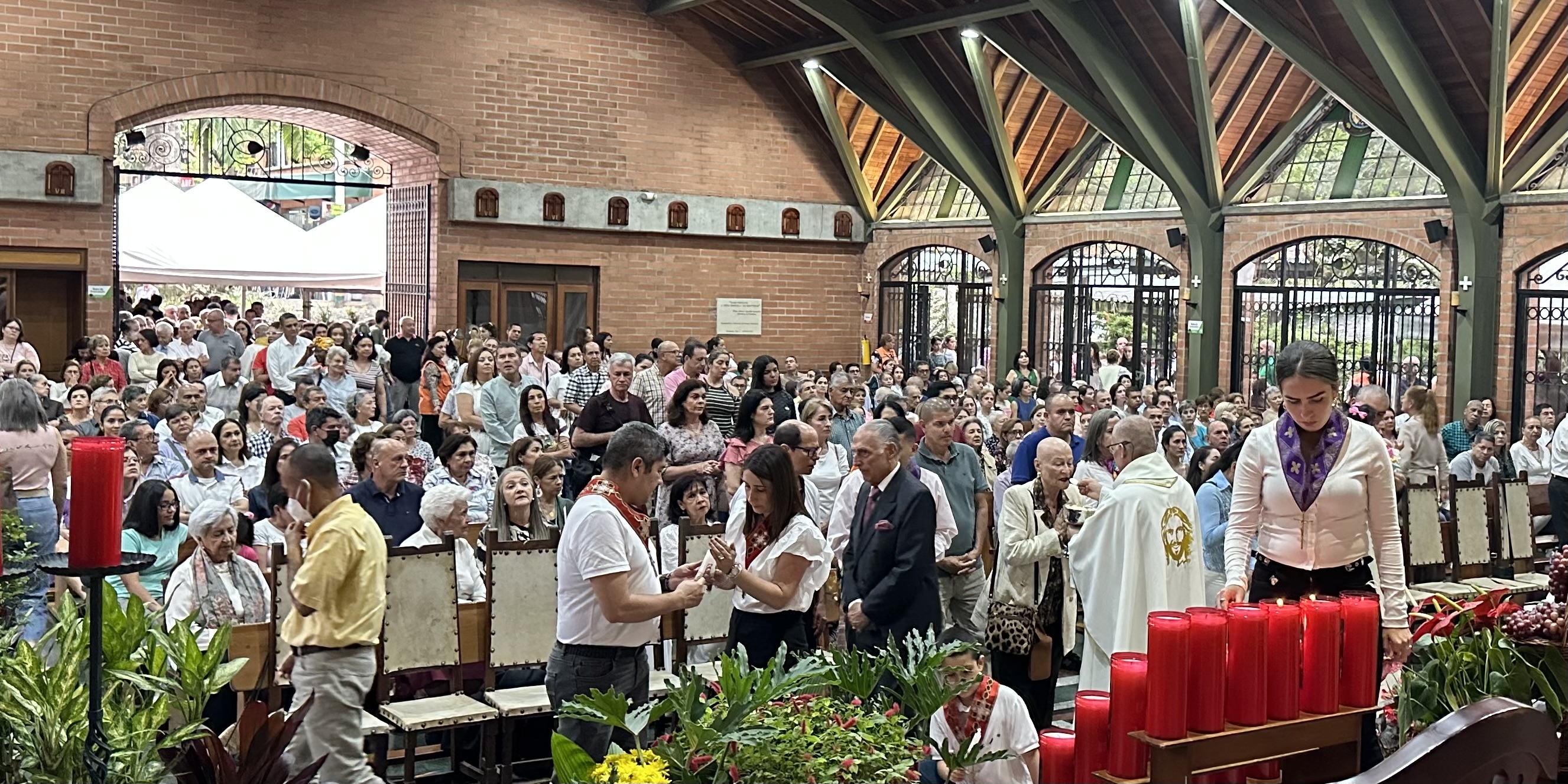
The community of believers was of one heart and mind. (Acts 4:32-37)
https://bible.usccb.org/bible/readings/041823.cfm
“Come, my friends, let us be of one heart and one mind.” Almost 50 years ago when I was in seminary we had a class retreat with the spiritual writer, Father Ed Hays. He had spent a week in prayer at Gethsemani Abbey preparing himself for our retreat. He used this phrase as the centering prayer of our time together. He held up a copy of the New Testament and told us, “This is our instruction manual.”
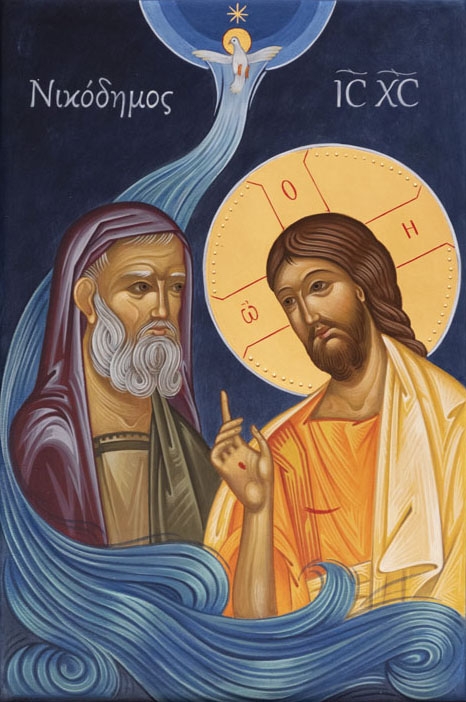
There was a Pharisee named Nicodemus, a ruler of the Jews. He came to Jesus at night and said to him, "Rabbi, we know that you are a teacher who has come from God, for no one can do these signs that you are doing unless God is with him." Jesus answered and said to him, "Amen, amen, I say to you, unless one is born from above, he cannot see the Kingdom of God." Nicodemus said to him, "How can a man once grown old be born again? Surely he cannot reenter his mother's womb and be born again, can he?" (Jn 3:1-8)
https://bible.usccb.org/bible/readings/041723.cfm
“Misunderstandings” (some would say irony) are a rhetorical device in the Fourth Gospel, for example “born from above.” Note the phrase that Jesus uses is NOT “born again.” “Born again” is the misunderstanding on the part of Nicodemus which leads to the teaching of Jesus in this dialogue. We are born from above.
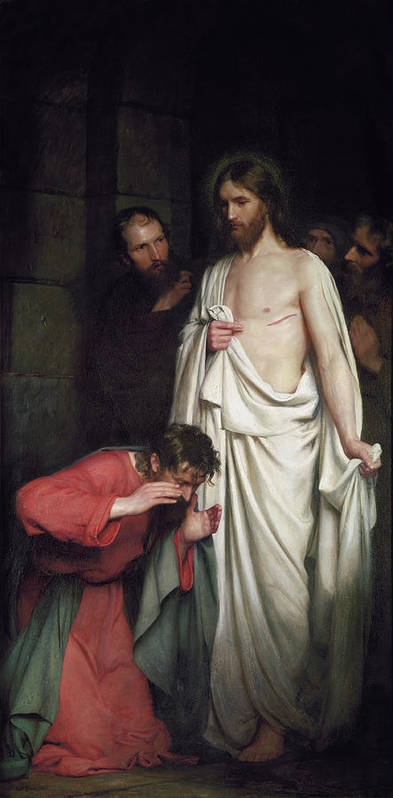
Thomas answered and said to him, “My Lord and my God!” Jesus said to him, “Have you come to believe because you have seen me? Blessed are those who have not seen and have believed.” (Jn 20:19-31)
https://bible.usccb.org/bible/readings/041623.cfm
Mercy is giving others another chance. It’s what we call a do-over. Thomas wins a second chance for all of us. For whatever reason, Thomas missed the first Easter Sunday—he was simply absent. And when the others told him what had happened, he refused to believe. But the NEXT Sunday he didn’t miss the gathering, Thomas was there. And even though the Lord tells him to touch his wounds, Thomas DOESN’T. Instead Thomas sees and believes and then gives us the highest confession of Jesus in the entire New Testament, “My Lord and my God!” Doubting Thomas has become Thomas is the Believer! That is truly Divine Mercy, a mercy we in turn should extend to others.
