


These reflections are a result of more than 40 years of ministry as a Roman Catholic priest. Most of these years I spent in the Diocese of Charlotte which covers Western North Carolina. Now I am retired, and live in Medellín, Colombia where I continue to serve as a priest in the Archdiocese of Medellín.
Then Barnabas went to Tarsus to look for Saul, and when he had found him he brought him to Antioch. For a whole year they met with the Church and taught a large number of people, and it was in Antioch that the disciples were first called Christians. (Acts 11:21b-28; 13:1-3)
https://bible.usccb.org/bible/readings/061122.cfm
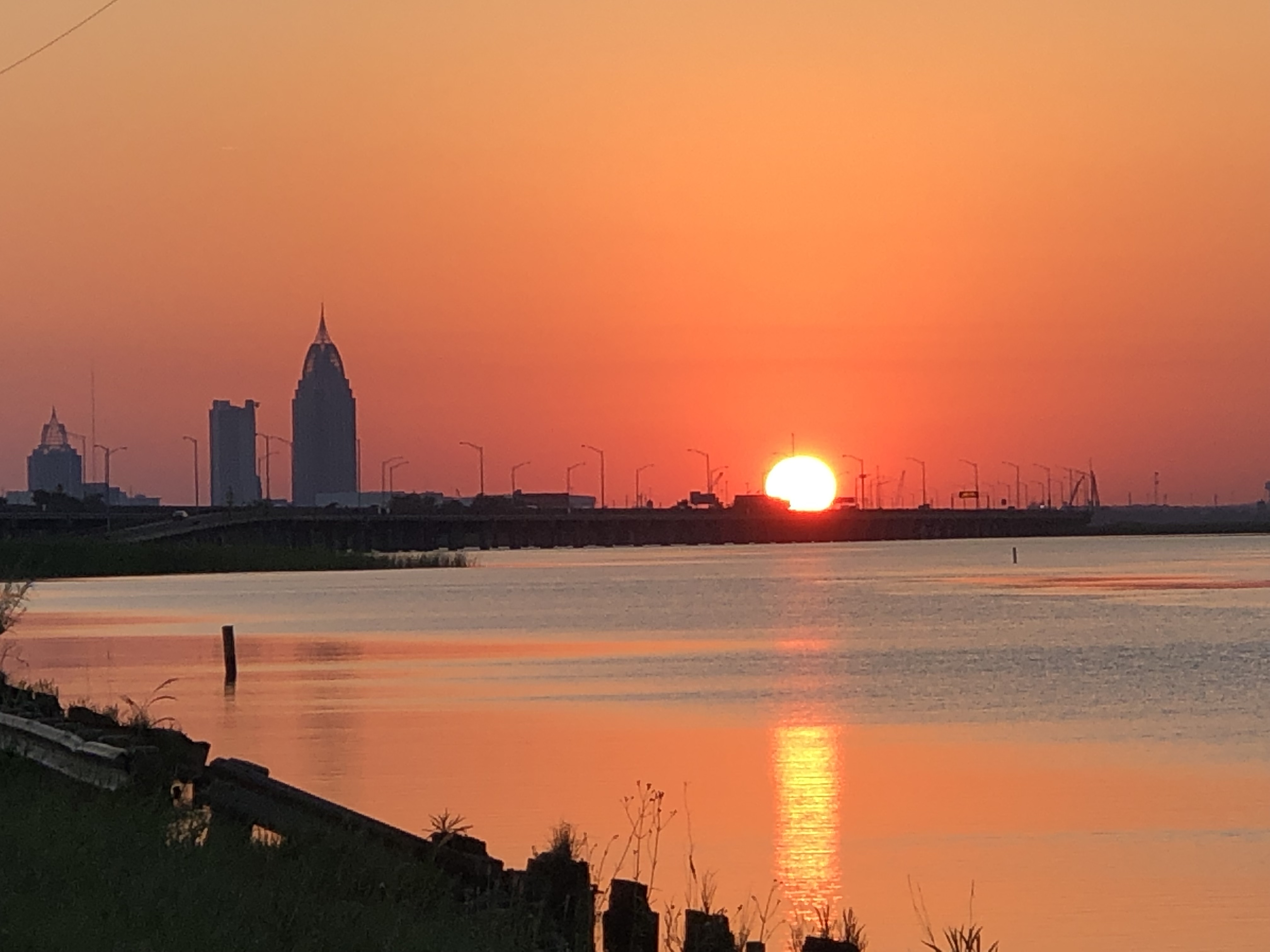
Barnabas seeking out Saul becomes one of the most important moments in the life of the early church. Saul, of course, becomes Paul, the preacher to the Gentiles. And “it was in Antioch that the disciples were first called Christians” . . . or as the Cotton Patch version of the New Testament says: And it was here in Mobile that the disciples were first labeled “Christians.” And today’s picture is of my hometown Mobile, Alabama, at sunset.
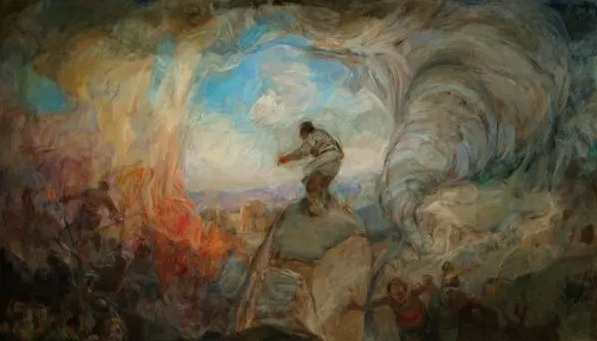
At the mountain of God, Horeb, Elijah came to a cave, where he took shelter. But the word of the LORD came to him, “Go outside and stand on the mountain before the LORD; the LORD will be passing by.” A strong and heavy wind was rending the mountains and crushing rocks before the LORD— but the LORD was not in the wind. After the wind there was an earthquake—but the LORD was not in the earthquake. After the earthquake there was fire—but the LORD was not in the fire. After the fire there was a tiny whispering sound. When he heard this, Elijah hid his face in his cloak and went and stood at the entrance of the cave. (1 Kgs 19:9a, 11-16)
https://bible.usccb.org/bible/readings/061022.cfm
Not in the wind nor the earthquake but in the tiny whispering sound Elijah knew the presence of the Lord. Perhaps there is a lesson for us all. God is not found in the special effects but rather in the quiet, non-flashy ordinary things of everyday life.

"Therefore, if you bring your gift to the altar, and there recall that your brother has anything against you, leave your gift there at the altar, go first and be reconciled with your brother, and then come and offer your gift." (MT 5:20-26)
https://bible.usccb.org/bible/readings/060922.cfm
Sometimes we prefer to get the cart before the horse, but the Lord won’t let us get away with it. If you want to get religious, says the Lord, you have to start by mending fences.
Then the prophet Elijah prayed: “Answer me, LORD! Answer me, that this people may know that you, LORD, are God and that you have turned their hearts back to you.” (1 Kgs 18:20-39)
https://bible.usccb.org/bible/readings/060822.cfm
The story of the prophet Elijah and the 450 prophets of Baal is one of the most exciting in Scripture. But even more impressive is the prophet's simple prayer to the God who "can change hearts."
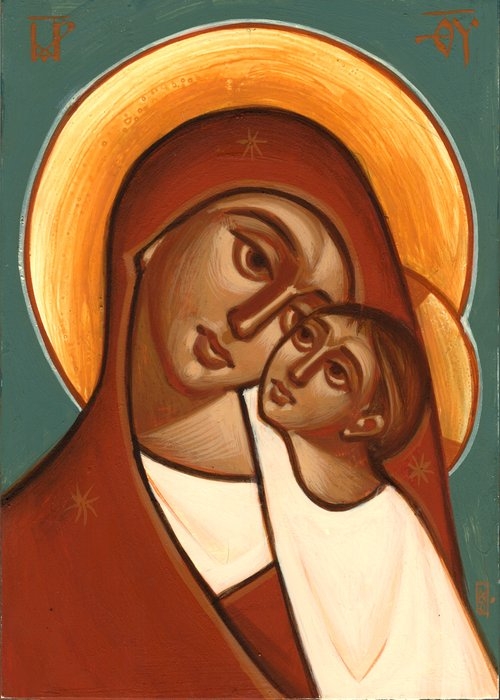
When they entered the city they went to the upper room where they were staying, Peter and John and James and Andrew, Philip and Thomas, Bartholomew and Matthew, James son of Alphaeus, Simon the Zealot, and Judas son of James. All these devoted themselves with one accord to prayer, together with some women, and Mary the mother of Jesus, and his brothers. (Acts 1:12-14)
https://bible.usccb.org/bible/readings/060622.cfm
Today we remember the Blessed Virgin Mary who remained in prayer with the early community of disciples. We call her Mother of the Church for the Lord Jesus has entrusted her to our care and says to us as he says to Beloved Disciples in every age, “There is your mother.”
