


These reflections are a result of more than 40 years of ministry as a Roman Catholic priest. Most of these years I spent in the Diocese of Charlotte which covers Western North Carolina. Now I am retired, and live in Medellín, Colombia where I continue to serve as a priest in the Archdiocese of Medellín.
I ask, then, has God rejected his people? Of course not! . . . For the gifts and the call of God are irrevocable. (Rom 11:1-2, 11-12, 25-29)
https://bible.usccb.org/bible/readings/110423.cfm
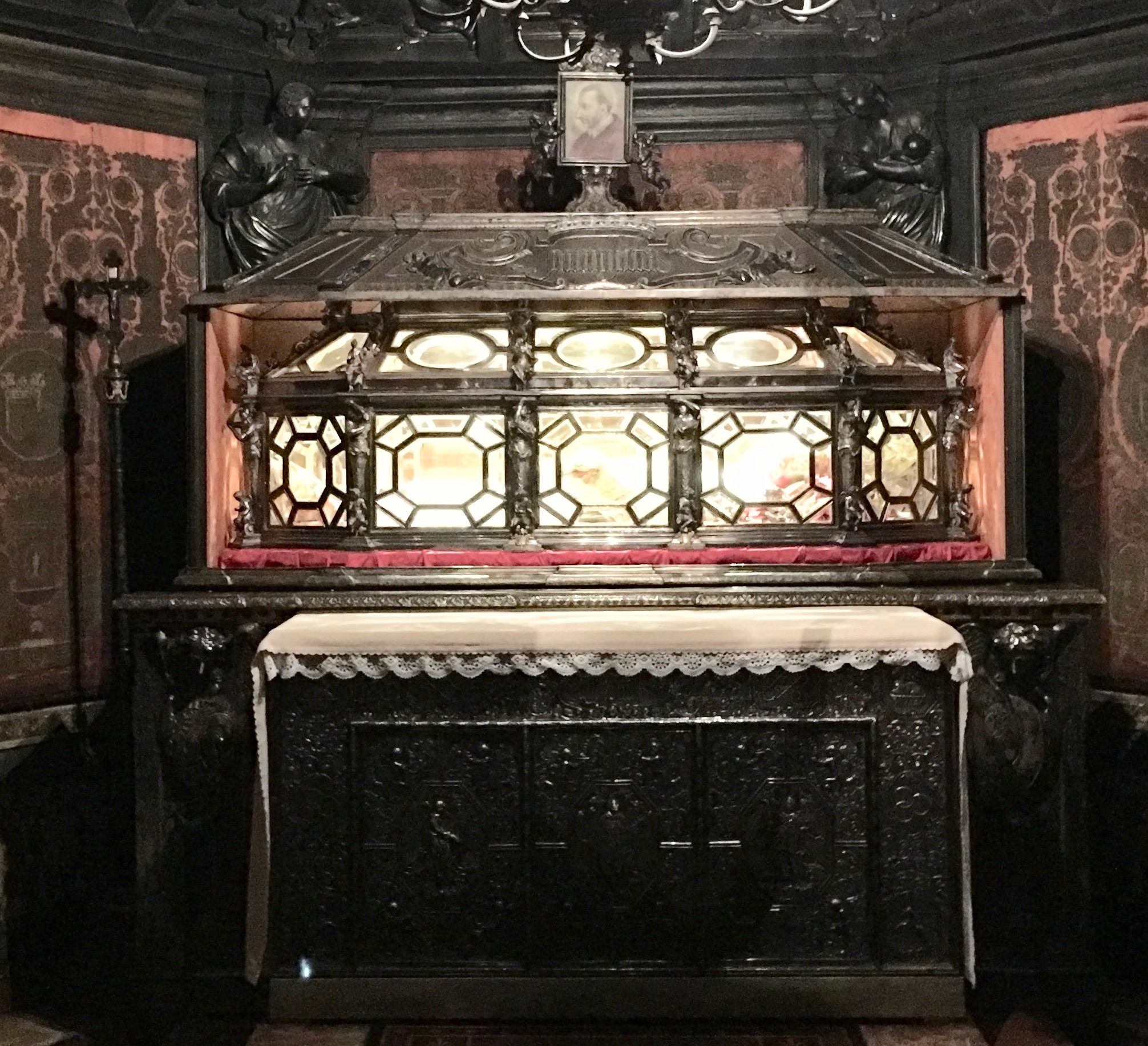
In the past Christians have used isolated passages from the Scriptures to justify antisemitism. Following the teaching of Saint Paul the Second Vatican Council strongly condemned antisemitism in all its forms. Saint Charles Borromeo (1538-1584) was Cardinal Archbishop of Milan, Italy, and attended the Council of Trent. He is responsible for the founding of seminaries and of the Confraternity of Christian Doctrine (CCD).

Alleluia
R. Alleluia, alleluia.
My sheep hear my voice, says the Lord; I know them, and they follow me. (Jn 10:27)
R. Alleluia, alleluia.
https://bible.usccb.org/bible/readings/110323.cfm
The Lord always calls his own as he called Martin de Porres (1579-1639). Matin was the illegitimate son of a Spanish nobleman. Martin was of mixed race: his mother was a freed African slave of Native descent. They were abandoned by the father and under Peruvian law, being mulatto, Martin had no rights. He was finally accepted by the Dominicans who gave him menial tasks to perform. He worked in the infirmary and was known as a healer. I remember when he was canonized in 1962. My mom was working at Blessed Martin de Porres Hospital (a Black maternity hospital run by the Sisters of Mercy). After the canonization the hospital was renamed, Saint Martin de Porres. The shiny new “saint” letters stood out on the hospital sign!

The souls of the just are in the hand of God, and no torment shall touch them. They seemed, in the view of the foolish, to be dead; and their passing away was thought an affliction and their going forth from us, utter destruction. But they are in peace. (Wis 3:1-9)
https://bible.usccb.org/bible/readings/110223.cfm
Give rest, O Christ,
to thy servants with thy saints,
where sorrow and pain are no more;
neither sighing, but life everlasting.
(Russian Kontakion for the Departed, Orthodox Liturgy)
Eternal rest grant unto them, O Lord. And let perpetual light shine upon them. May they rest in peace. Amen. And may their souls, and the souls of all the faithful departed through the mercy of God rest in peace. Amen.
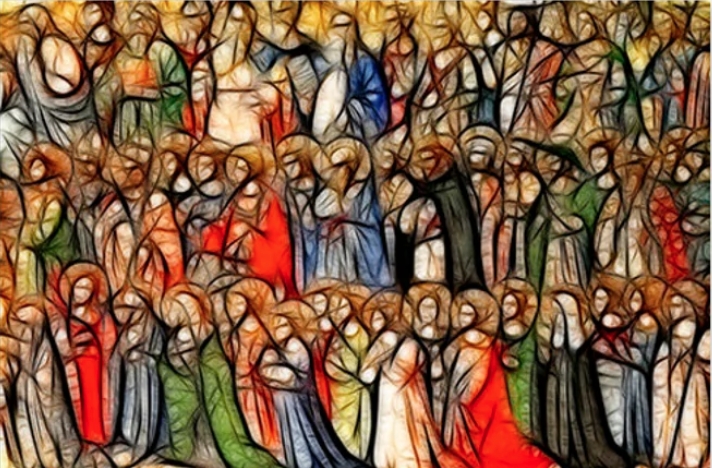
After this I had a vision of a great multitude, which no one could count, from every nation, race, people, and tongue. They stood before the throne and before the Lamb, wearing white robes and holding palm branches in their hands. They prostrated themselves before the throne, worshiped God, and exclaimed: “Amen. Blessing and glory, wisdom and thanksgiving,
honor, power, and might be to our God forever and ever. Amen." (Rev 7:9-12)
https://bible.usccb.org/bible/readings/110123.cfm
Today’s Feast of All Saints and tomorrow’s Commemoration of All the Faithful Departed form two moments of one feast—remembering and celebrating all the faithful ones who have gone before us and handed on the faith to us. As we say in the Apostles' Creed: "I believe in the communion of saints." Happy Feast Day to them and to all of us! May we follow them walking in the footsteps Jesus.

I consider that the sufferings of this present time are as nothing compared with the glory to be revealed for us. For creation awaits with eager expectation the revelation of the children of God. (Rom 8:18-25)
https://bible.usccb.org/bible/readings/103123.cfm
The revelation of the children of God . . . the “present time” with all its problems can make us despair that things could ever get better or be different. Saint Paul sees the sufferings as evidence of the LONGING and the EAGER EXPECTATION for what God has in store. I think this old world is going to be surprised at that revelation and also at the glory.
