


These reflections are a result of more than 40 years of ministry as a Roman Catholic priest. Most of these years I spent in the Diocese of Charlotte which covers Western North Carolina. Now I am retired, and live in Medellín, Colombia where I continue to serve as a priest in the Archdiocese of Medellín.
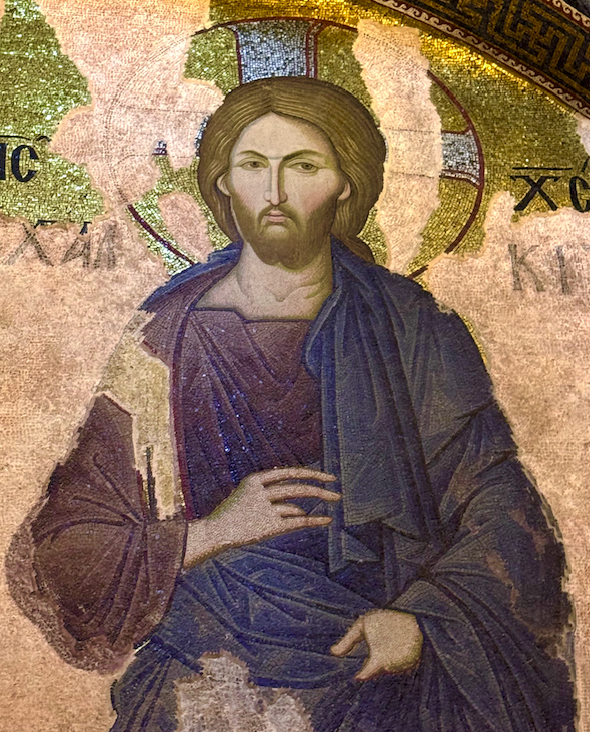
For I am convinced that neither death, nor life, nor angels, nor principalities, nor present things, nor future things, nor powers, nor height, nor depth, nor any other creature will be able to separate us from the love of God in Christ Jesus our Lord. (Rom 8:31b-39)
https://bible.usccb.org/bible/readings/103025.cfm
One of the most quoted passages from Saint Paul, but at the same time, the passage least believed. If no one and no thing can separate us from God’s love in Christ Jesus, why are so many of us convinced that the Lord couldn’t possibly love us? As Saint Paul teaches, Christ loves us even when we can’t manage to love ourselves. https://youtu.be/i08da4iH9Dw?si=bmTiq8kGuUQNLm4s
People will come from the east and the west and from the north and the south and will recline at table in the Kingdom of God. (Lk 13:22-30)
https://bible.usccb.org/bible/readings/102925.cfm
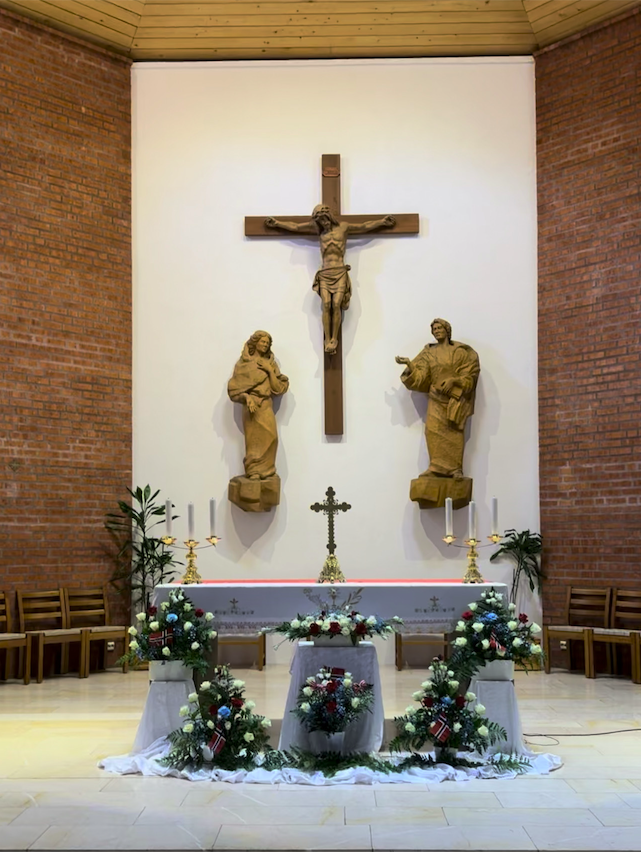
What a powerful image of the Eucharist. I’m so grateful to have celebrated and attended Masses with communities of faith in other countries. As the old hymn sings: In Christ there is no east or west, in him no south or north, but one great fellowship of love throughout the whole wide earth! Today’s picture is of Saint Bridget Catholic Church in Fredrikstad, Norway. Today’s video is from Chapel of Kristus Aman in Kuala Lumpur, Malaysia. https://youtu.be/z54-9_kaKL0?si=TFx3sW1u3tPZY-Tn
Jesus went up to the mountain to pray, and he spent the night in prayer to God. When day came, he called his disciples to himself, and from them he chose Twelve, whom he also named Apostles. (Lk 6:12-16)
https://bible.usccb.org/bible/readings/102825.cfm
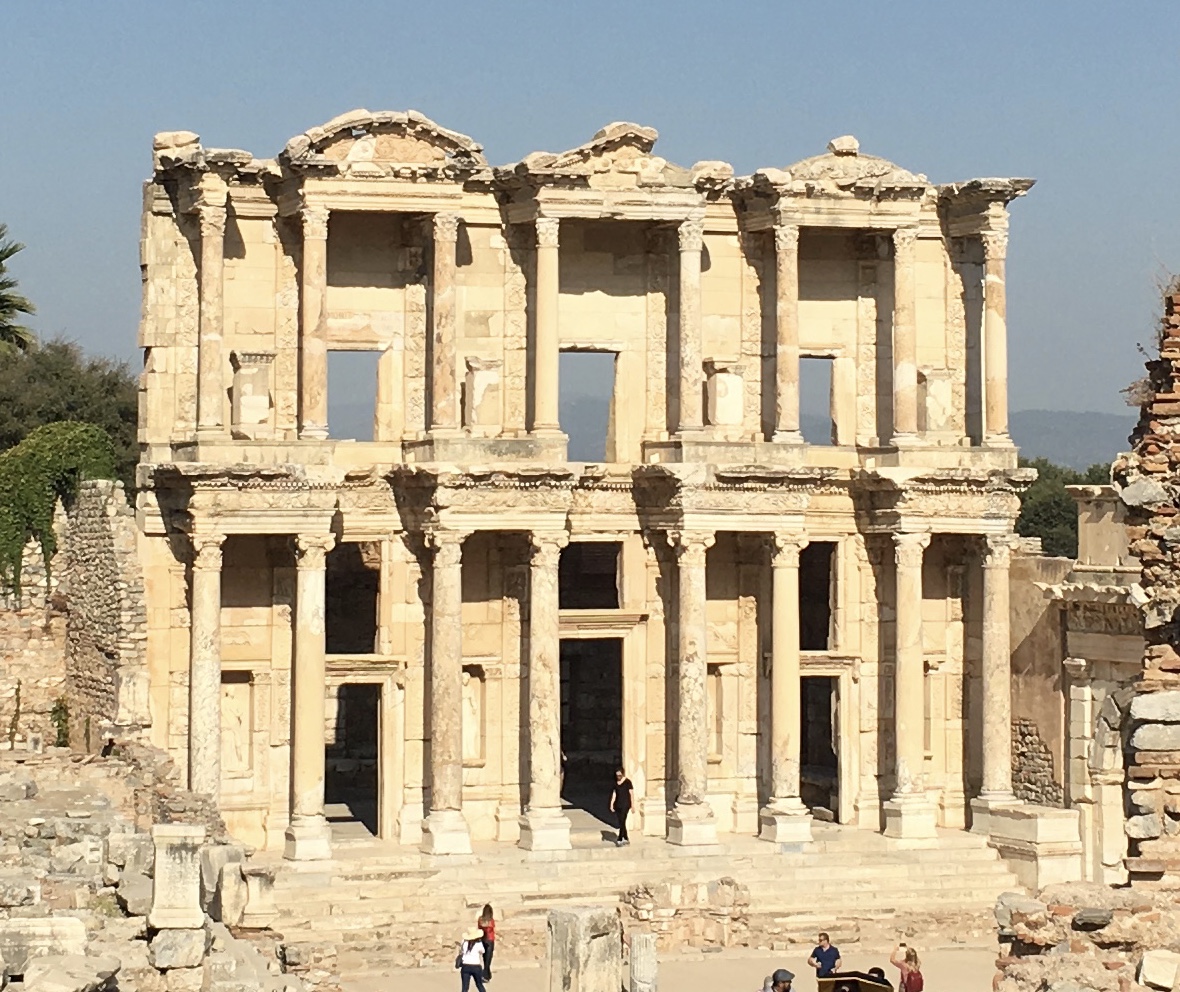
Only Luke’s gospel says that the Twelve were also named apostles, but there are many more apostles, for example Paul and Barnabas are also apostles. The Letter to the Ephesians says that we are members of the household of God built on the foundation of the apostles and prophets. Christian prophets and Christian apostles preached the gospel to the community at Ephesus. And all together we are built into a dwelling place of God in the Spirit. Today's photo is of the ancient city of Ephesus. https://youtu.be/Cf_Rqaywb5M?si=3Uk3D5d6fpAPGE3r
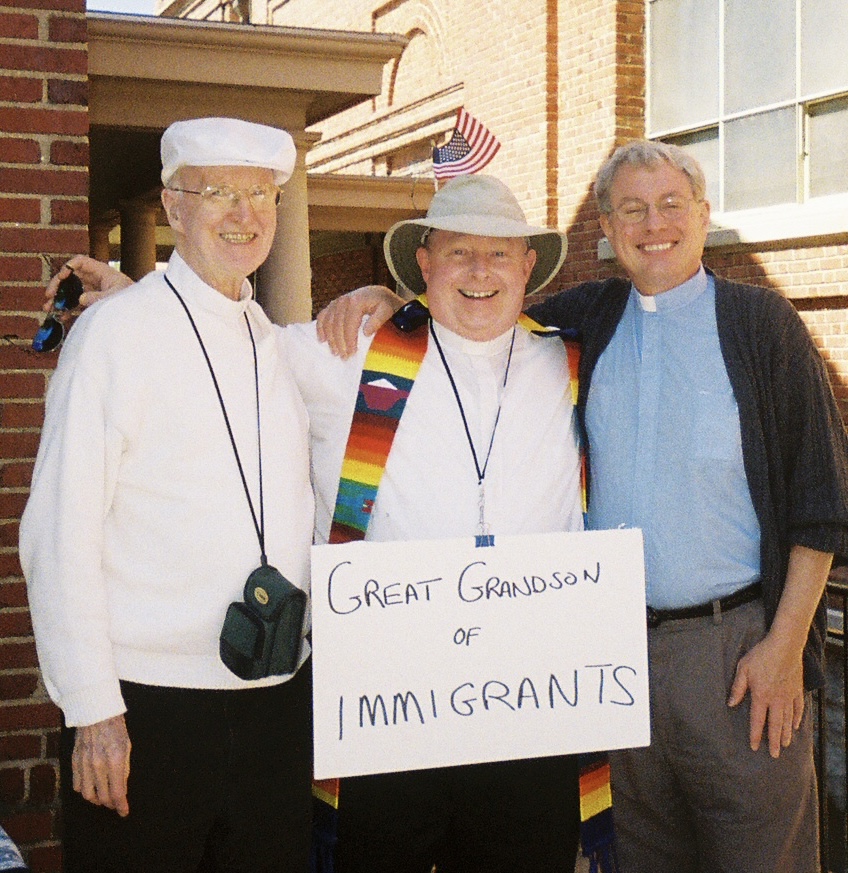
For those who are led by the Spirit of God are children of God. For you did not receive a spirit of slavery to fall back into fear, but you received a spirit of adoption, through which we cry, "Abba, Father!" (Rom 8:12-17)
https://bible.usccb.org/bible/readings/102725.cfm
Through the spirit of adoption we recognize that God is our Father and that we are all sisters and brothers. Unfortunately, many prefer the spirit of slavery. In his Apostolic Exhortation, Pope Leo talks about the inhuman treatment of immigrants: “Where the world sees threats, the church sees children; where walls are built, the church builds bridges. She knows that her proclamation of the Gospel is credible only when it is translated into gestures of closeness and welcome. And she knows that in every rejected migrant, it is Christ himself who knocks at the door of the community” (Dilexi te, 75). https://youtu.be/q1R4xFrQQNE?si=UQc7zy99lhFfNg6O
The LORD is a God of justice, who knows no favorites. Though not unduly partial toward the weak, yet he hears the cry of the oppressed. The Lord is not deaf to the wail of the orphan, nor to the widow when she pours out her complaint. (Sir 35:12-14, 16-18)
https://bible.usccb.org/bible/readings/102625.cfm
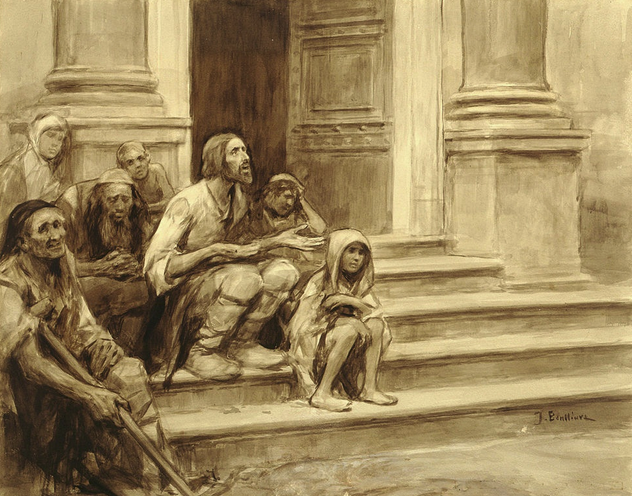
It’s always distressing when so-called good church people ignore the very Bible they love to quote. As the psalm today reminds us, the Lord hears the cry of the poor. God will not be mocked. There may be a very heavy price to pay indeed. Today’s image is Francis requests alms, sitting among the poor by José Benlliure y Gil (1855–1937). https://youtu.be/w_Q0FjuAUZY?si=zOWSdt3SUG1vBI4E
